
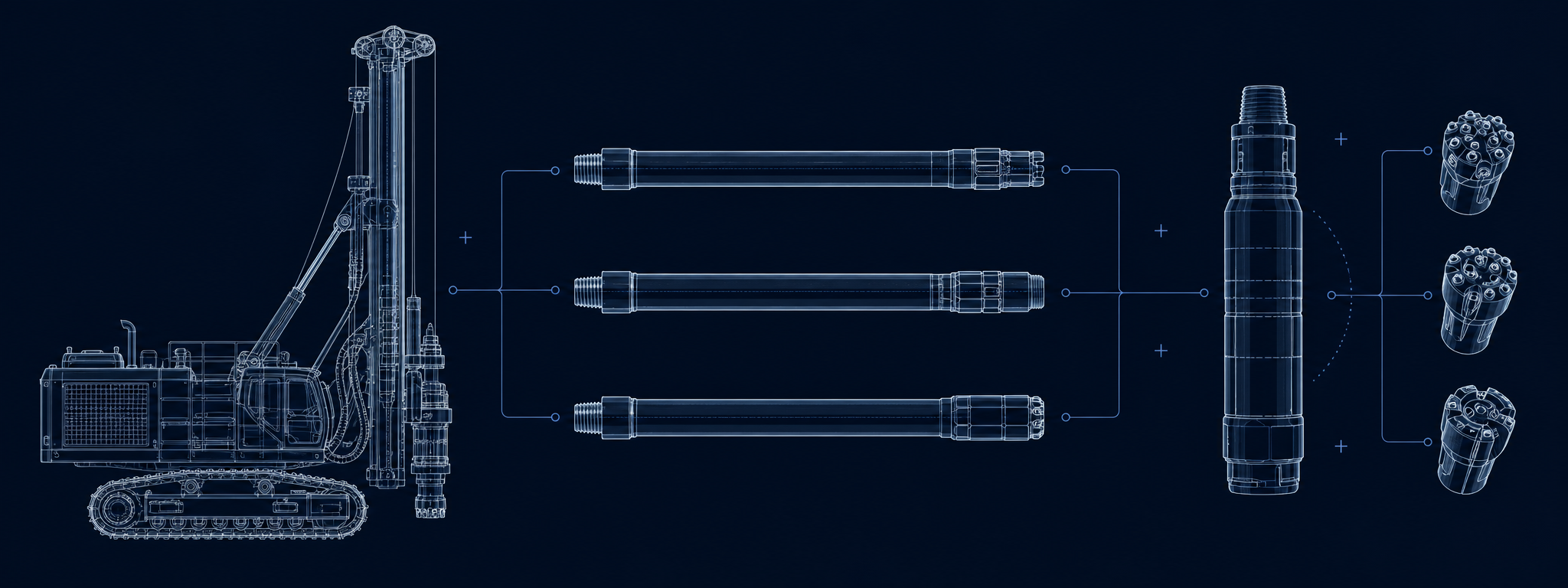
Choosing a drill rod for construction drilling is rarely a matter of selecting the hardest product on the market. A rod works as part of a complete drilling system. Ground conditions, drilling method, torque, impact, flushing, connection design and handling practice all influence whether a string performs reliably.
Start With the Ground and Drilling Method
Soft formations, mixed overburden, fractured rock and competent hard rock place different demands on the rod. A rotary project may prioritize torsional performance and connection stability, while a percussive or down-the-hole application may impose repeated shock loads. A rod suitable for one method should not automatically be treated as suitable for another.
Before requesting a quotation, record the formation, hole diameter, planned depth, drilling method, machine interface, tooling connection and expected operating conditions. If the geology is uncertain, say so. A responsible supplier should discuss what must be confirmed during the first bore rather than turn uncertainty into a promise.
Check the Connection as Carefully as the Tube
Threads must match the intended tooling and be handled according to the supplier’s instructions. Poor cleaning, cross-threading, insufficient make-up or excessive torque can create problems even when the tube material is appropriate. Connection geometry also affects outside diameter, clearance and the way torque is transferred through the string.
Before mixing components from different sources, verify the exact connection designation, shoulder arrangement, dimensions and operating limits. Visual similarity is not proof of compatibility.
Consider Length, Handling and Maintenance
Longer rods may reduce the number of connections in some drilling programs, but they can require different lifting, storage and alignment procedures. The machine, mast, carousel or manual handling arrangement should be considered before standardizing a rod length.
Field life also depends on alignment, torque control, lubrication, cleaning and protected storage. Material and heat treatment are relevant, but they should be reviewed together with inspection practice and dimensional tolerances.
Compare Verifiable Information
Buyers should compare dimensions, connection type, applicable drilling method, inspection practice, packaging and replacement availability. If a supplier claims exceptional service life or a specific depth capability, ask what test conditions support that claim. Separate published specifications from results that depend on a particular formation and operating procedure.
The most useful drill rod is the one that matches the project system. A short selection brief gives manufacturers a clear basis for confirming compatibility and preparing a quotation.


